

Treatment in the Permanent Dentition
Modern methods for faster, gentler and above all more discreet therapy
Treatment in Permanent Dentition
Modern Procedures for Faster, Gentler, and Above All More Discreet Therapy
Regular orthodontic treatment is usually started before the end of pubertal growth, at approximately 9 to 12 years of age. As long as jaw growth is not yet complete, misalignments can be more easily corrected.
Whether removable and/or fixed braces are used depends on the diagnosis and the individual situation. Minor dental misalignments and jaw anomalies can often be corrected with removable braces. For more extensive treatments in permanent dentition, fixed braces are recommended to correct anomalies and dental misalignments.

Ceramic Brackets – the Discreet Alternative
If you choose fixed braces or brackets, you often face the choice between classic metal brackets, colored brackets, or discreet ceramic brackets. At our specialist orthodontic practice in Gelnhausen, we advise you personally and individually. Together we find the solution that best suits your aesthetic expectations.
Ceramic brackets are tooth-colored or transparent and therefore particularly inconspicuous. They are especially suitable for patients who place great value on a discreet appearance during public appearances, at school, or in their professional life.
Discreet Correction with Invisible Braces
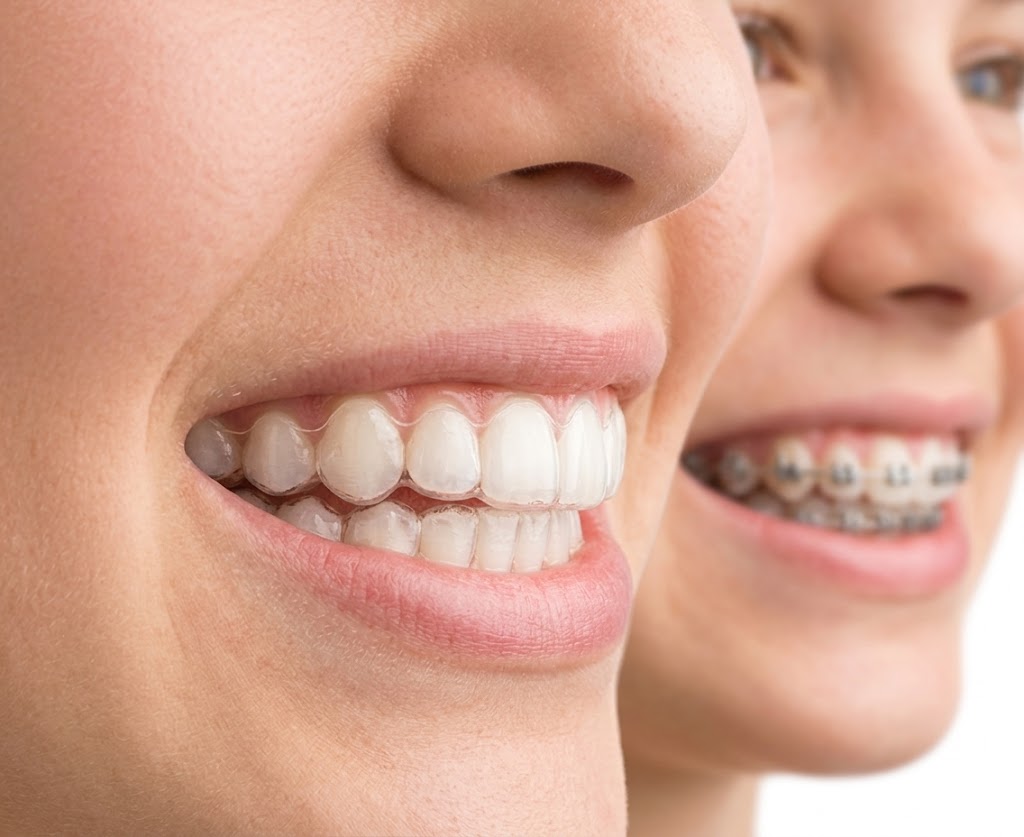
Clear Aligners
We offer young patients a discreet correction with individually fitted dental aligners. The transparent, nearly invisible aligners are hardly noticed in everyday life and enable an elegant correction without being noticeable. The ultra-thin aligners fit precisely, are comfortable to wear, and do not interfere with speaking or laughing.Examples of therapeutic measures in this phase:
- Correction of rotations and axial misalignments of teeth
- Integration of displaced teeth
- Correction of deep and open bites by lengthening or shortening individual teeth
- Closing or opening gaps
In addition to the standard silver-colored brackets, aesthetically appealing, tooth-colored ceramic brackets can alternatively be bonded. These do not discolor even after prolonged wear, as the material, unlike plastic brackets, does not absorb colorants from food.
Sports Mouthguard for Children and Adolescents
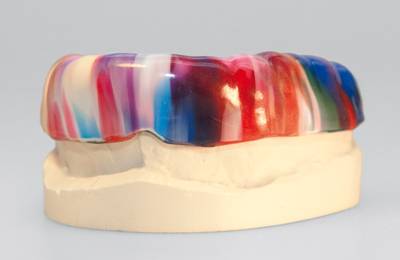
For children, adolescents, and athletically active patients, a sports mouthguard is recommended. Many sports carry a significant risk of injury to lips, cheeks, tongue, and teeth.
95% of all dental injuries occur before the age of 21. The sports mouthguard provides great protection against unnecessary tooth loss, annoying injuries, and tooth fractures, especially for children and adolescents, inline skating or skateboard enthusiasts.
- Orthodontic treatment usually begins between the ages of 9 and 12, while jaw growth is still ongoing.
- Depending on the findings, removable or fixed braces are used.
- Fixed braces are particularly suitable for correcting pronounced dental and jaw misalignments.
- Ceramic brackets are tooth-colored and offer a discreet alternative to classic metal brackets.
- With lingual technique, the fixed braces are attached to the inside of the teeth and are virtually invisible from the outside.
- Clear aligners enable discreet dental correction and hardly interfere with speaking or laughing.
- In permanent dentition, tooth rotations, misalignments, displaced teeth, and gaps can be specifically treated.
- An individually fitted sports mouthguard protects teeth and jaws during sports with increased risk of injury.
- The appropriate treatment always depends on the personal diagnosis and individual treatment goals.
Häufig gestellte Fragen
Another alternative are aligners. The transparent, nearly invisible dental aligners are hardly noticed in everyday life and allow for an elegant correction without drawing attention.
For an optimal and fast treatment result, aligners must be worn at least 18 to a maximum of 22 hours per day. The trays should only be removed for eating, drinking sugary or acidic beverages, and for dental care. Consistent wearing shortens the overall treatment time.